
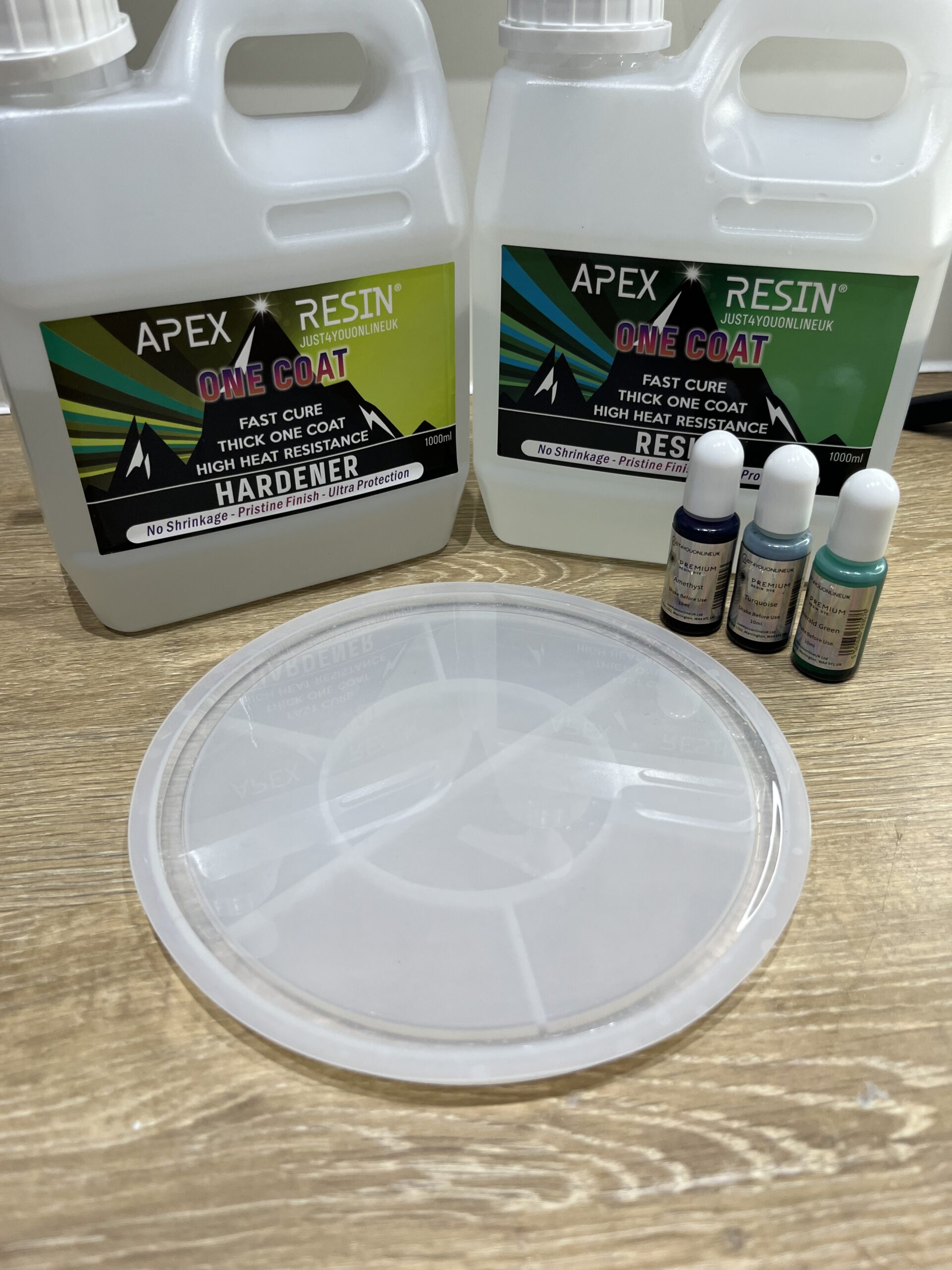
If you’re new to resin crafting, one of the first questions you’re likely to ask is: what is the best resin for beginners?
With so many different types of resin available, choosing your first one can feel confusing. Should you start with epoxy resin, UV resin or eco resin? Do you need a special beginner resin? And what type of resin is best for making jewellery, coasters, trays or decorative pieces?
The good news is that you don’t need to buy the most expensive resin on the market to get started.
The best resin for beginners is the one that suits the project you want to make.
For many beginners who want to make a variety of crafts, a good-quality two-part epoxy resin is an excellent place to start. However, if you want to make small jewellery pieces or charms and want something that cures quickly, UV resin may be easier.
If you’re interested in making decorative homeware such as coasters, trays and pots, eco resin is another fantastic option.
In this guide, we’ll compare the different types of resin and help you decide which is right for you.
Quick answer: What is the best resin for beginners?
If you want a resin that can be used for a wide range of projects, epoxy resin is probably the best resin for beginners.
A good beginner-friendly epoxy resin should:
- Be easy to measure and mix
- Have a straightforward mixing ratio
- Have a reasonable working time
- Cure clear
- Release bubbles relatively easily
- Be suitable for the type of project you want to make
- Come with clear manufacturer’s instructions
- Have good safety information
However, UV resin can be easier for complete beginners making small projects, because it doesn’t require you to mix resin and hardener.
Meanwhile, eco resin is a great option if you want to create solid decorative items such as coasters, trays and pots, particularly if you prefer working with a water-mixable material.
So, before buying your first resin, think about what you actually want to make.
The three main types of resin for beginners
Let’s look at the three types you’re most likely to come across.
| Resin type | Best for | Difficulty | Curing method |
|---|---|---|---|
| Epoxy resin | Coasters, trays, jewellery, art, casting and coating | ⭐⭐⭐ | Chemical cure |
| UV resin | Jewellery, charms, small moulds and details | ⭐⭐ | UV light |
| Eco resin | Coasters, trays, pots and decorative objects | ⭐⭐ | Water + powder OR Water + powder + chemical binder |
There isn’t one resin that is perfect for every project.
1. Epoxy resin
Epoxy resin is my top choice for beginners who want to learn resin crafting as a hobby and make lots of different types of projects.
Epoxy resin generally consists of two components: resin and hardener. These are mixed together in the ratio specified by the manufacturer. Once combined, a chemical reaction begins and the resin gradually cures into a solid material.
The exact mixing ratio varies between products, so always follow the manufacturer’s instructions rather than assuming every epoxy resin is 1:1.
Epoxy resin is extremely versatile. Depending on the formulation, it can be used for:
- Resin coasters
- Jewellery
- Keyrings
- Trinket dishes
- Serving boards
- Resin art
- Doming and flood coating
- Moulded decorations
- Tables and larger projects
- Embedding dried flowers
- Adding glitter, mica powder and other decorative elements
One of the biggest advantages of epoxy resin is its relatively long working time. You can usually spend time arranging flowers, adding pigments, removing bubbles and creating your design before the resin cures.
The downside of epoxy resin
The main disadvantage for beginners is that you have to get the mixing right.
You need to measure the resin and hardener accurately and mix them thoroughly. Incorrect measuring or incomplete mixing can result in resin that remains sticky, soft or doesn’t cure properly.
Epoxy resin also takes considerably longer to cure than UV resin. Depending on the product and conditions, your project may need many hours before it can be handled and longer before it reaches full cure. Learn how to speed up the curing of your epoxy resin.
That isn’t necessarily a bad thing, though. The longer working time can actually make epoxy resin easier for larger or more complicated projects.
2. UV resin
If you’re planning to make small resin jewellery, charms, keyrings or other shallow projects, UV resin could be the best resin for you.
Unlike epoxy resin, UV resin is generally supplied as a single component and doesn’t need to be mixed with a separate hardener.
Instead, it cures when exposed to suitable UV light.
This makes it particularly appealing to beginners because there is no resin-to-hardener ratio to calculate and no two-part mixture to prepare.
UV resin can cure very quickly under the correct conditions, which means you can often complete small projects much faster than with epoxy resin.
UV resin is great for:
- Earrings
- Pendants
- Charms
- Keyrings
- Small moulds
- Jewellery components
- Small decorative pieces
- Adding a glossy top coat to some projects
However, UV resin isn’t automatically better than epoxy resin.
The UV light needs to reach the resin for it to cure properly. Thick, heavily pigmented or opaque pieces can therefore be more challenging because UV light may not penetrate all the way through the material.
For that reason, UV resin is generally better suited to small, thin layers and projects rather than large or deep casts.
3. Eco resin
Eco resin is another popular option for beginners, particularly if you’re interested in making home décor rather than traditional clear resin art.
There are several different products sold as eco resin, so it’s important to check the individual manufacturer’s instructions and ingredients.
Many craft eco resins are powder-based systems that are mixed with water and then poured into moulds.
They can be used to make:
- Coasters
- Trinket dishes
- Plant pots
- Candle holders
- Decorative trays
- Sculptural objects
- Home décor
- Jesmonite-style projects
Eco resin can be a particularly satisfying material for beginners because you don’t have to work with the same clear liquid resin process associated with epoxy resin.
I’ve previously covered the basics of getting started with eco resin in more detail here.
Epoxy resin vs UV resin: which is easier for beginners?
This is one of the most common questions new resin crafters ask.
The answer depends on the project.
Choose UV resin if:
- You want to make small jewellery pieces
- You want very fast curing
- You don’t want to mix two components
- You are working with shallow moulds
- You want to experiment with small projects
Choose epoxy resin if:
- You want to make coasters
- You want to create trays
- You want to embed flowers or photographs
- You want to make larger pieces
- You want more time to work on your design
- You want one resin that can be used for lots of different projects
UV resin can feel easier initially because there is no mixing stage. However, epoxy resin is often the better long-term beginner resin because it opens up a much wider range of projects.
What should you look for when buying resin as a beginner?
Don’t simply search for the cheapest resin you can find.
Instead, look for a product that makes learning as straightforward as possible.
1. A clear mixing ratio
If you’re buying epoxy resin, check the instructions carefully.
You may see ratios such as:
1:1
or
2:1
This refers to the amount of resin and hardener required.
Don’t assume that all epoxy resin uses the same ratio. Always check the specific product instructions.
2. A good working time
Beginners often need more time than experienced resin artists.
A resin that gives you enough time to:
- Add colour
- Arrange decorations
- Remove bubbles
- Create patterns
- Correct mistakes
can make the learning process much less stressful.
3. Good bubble release
Bubbles are one of the biggest frustrations for new resin artists.
A resin that releases bubbles well can make your first projects considerably easier.
That said, technique is just as important as the resin itself. Mixing too aggressively can introduce lots of air into your resin.
4. UV resistance
If you’re making clear resin art, look for information about UV resistance and yellowing.
No resin should be expected to remain perfectly clear forever under all conditions, but a formulation designed with UV stability in mind can help reduce yellowing over time.
5. Clear instructions
For your first resin, I would prioritise a manufacturer that provides detailed instructions and safety information.
You should be able to find information about:
- Mixing ratio
- Mixing method
- Working time
- Cure time
- Maximum pour depth
- Temperature requirements
- Safety precautions
What resin should you NOT buy as a beginner?
One of my biggest pieces of advice is:
Don’t buy a resin simply because it’s the cheapest.
You also don’t necessarily need a specialist deep-pour resin if your first project is a set of coasters.
Similarly, buying a huge professional-size kit before you’ve decided whether you enjoy resin crafting can be an expensive mistake.
Start with a manageable quantity.
Learn how your chosen resin behaves.
Then invest in larger quantities or specialist resins as your skills develop.
What is the best resin for beginners making coasters?
For resin coasters, epoxy resin is usually the best choice.
Look for a resin specifically designed for art, coating or casting projects, depending on the mould and depth of your pour.
A beginner coaster project is a great way to learn:
- Measuring
- Mixing
- Adding pigments
- Using mica powder
- Removing bubbles
- Working with silicone moulds
- Understanding curing times
- Demoulding
- Finishing and sanding
Once you’ve mastered coasters, you can start experimenting with trays, jewellery, decorative pieces and larger projects.
What is the best resin for beginners making jewellery?
For small jewellery pieces, you have two particularly good options:
UV resin if you want speed and are working with small, shallow pieces.
Epoxy resin if you want more working time or are creating larger moulded pieces.
What is the best resin for beginners making flower preservation?
If your goal is to preserve dried flowers, epoxy resin is generally the more versatile choice.
It gives you time to carefully position flowers and build your design.
However, flower preservation requires more than simply choosing the right resin.
Your flowers need to be properly dried before embedding them, and some flowers can change colour during the process.
You also need to consider the depth of your mould.
For thicker flower arrangements, choose a resin specifically designed for deeper pours rather than assuming that any art or coating resin can be poured deeply in one go.
Read next: How to Preserve Flowers in Resin
What is the easiest resin to use?
If we’re talking purely about the number of steps involved, UV resin is arguably the easiest resin for a beginner making a small project.
There’s no two-part mixing process, and you can cure the resin quickly with the appropriate UV light.
But if you’re asking:
What resin should I learn if I want to make lots of different resin crafts?
I’d choose epoxy resin.
It has a slightly steeper learning curve, but learning how to correctly measure, mix and pour epoxy gives you skills that can be applied to a huge variety of resin projects.
Resin safety for beginners
Before you start your first project, it’s important to understand that uncured resin should be handled carefully.
Always read the safety information supplied with your specific product and follow the manufacturer’s instructions.
Good general habits include:
- Work in a suitable, well-ventilated area.
- Wear appropriate protective gloves.
- Avoid getting uncured resin on your skin.
- Wear eye protection where recommended.
- Keep resin and hardener away from children and pets.
- Keep your workspace clean and organised.
- Never use a resin for food contact simply because it has cured unless the manufacturer specifically states that the finished product is suitable for that intended use.
- Read the product’s Safety Data Sheet where available.
Remember that “low odour” doesn’t mean “no safety precautions required.”
The safety requirements can vary between products, so always follow the instructions for the resin you’re using.
Read Next: Resin Safety for Beginners
My recommendation: What is the best resin for beginners?
If you’re completely new to resin and aren’t sure where to start, here’s my simple recommendation:
🥇 Best all-rounder: Epoxy resin
Choose epoxy resin if you want to learn resin crafting and eventually make lots of different projects.
Best for: Coasters, trays, jewellery, art, moulds, flower preservation and decorative pieces.
🥈 Best for small, quick projects: UV resin
Choose UV resin if you want to make small jewellery, charms or decorations and want a much faster curing process.
Best for: Jewellery, charms, keyrings and small moulds.
🥉 Best for home décor: Eco resin
Choose eco resin if you want to make solid decorative objects such as coasters, trays and pots.
Best for: Home décor, coasters, dishes and decorative moulds.
Final thoughts
So, what is the best resin for beginners?
There isn’t one universal answer.
The best resin depends on what you want to make.
If you want an all-round resin that allows you to experiment with lots of different techniques, I’d recommend starting with a good-quality epoxy resin.
If you want to make small pieces quickly and don’t want to deal with mixing two components, UV resin could be the better choice.
And if your main interest is making decorative homeware, eco resin is well worth considering.
Most importantly, don’t feel that you need to buy every resin, pigment, mould and tool before you’ve even completed your first project.
Start small, choose the resin that matches your project, learn the basics and build your resin collection as your skills develop.
That’s the best way to start resin crafting without spending a fortune.
Frequently Asked Questions
Is epoxy resin good for beginners?
Yes. Epoxy resin has a small learning curve because you need to measure and mix the two components correctly, but it is extremely versatile and can be used for many different resin projects.
Is UV resin easier than epoxy resin?
For small projects, UV resin can be easier because it doesn’t require mixing and can cure quickly under the correct UV light. However, epoxy resin is generally more versatile for larger and deeper projects.
What is the best resin for making coasters?
A suitable epoxy resin is usually the best choice for resin coasters. Always check the manufacturer’s recommended pour depth and curing instructions.
What is the best resin for resin jewellery?
UV resin is a popular choice for small jewellery pieces because it cures quickly. Epoxy resin is another excellent option, particularly for larger moulds and projects where you need more working time.
Can beginners use epoxy resin?
Absolutely. Epoxy resin is widely used by beginners. The key is to start with a simple project, follow the manufacturer’s mixing ratio and instructions carefully, and work safely.
How much resin do I need to start?
You don’t need a huge quantity. A small starter kit is usually enough to learn the basics and make several small projects. Once you know which type of resin and projects you enjoy, you can buy larger quantities.
Can I use any resin in any mould?
No. Different resins have different maximum pour depths, curing characteristics and intended uses. Always check whether your resin is suitable for the mould and project you are planning.
More Resin for Beginners guides
If you’re just starting your resin journey, you may also find these guides useful:
- Eco Resin for Beginners – The Basics
- Epoxy Resin vs Eco Resin
- How to Mix Epoxy Resin
- How to Pour Resin
- How to Stop Bubbles in Epoxy Resin
- What Is Epoxy Resin?
- What Is UV Resin?
- How Long Does Epoxy Resin Take to Cure?
Start with the project you want to make, choose the resin designed for that job, and don’t be afraid to learn from a few mistakes along the way. That’s how every resin artist starts!