
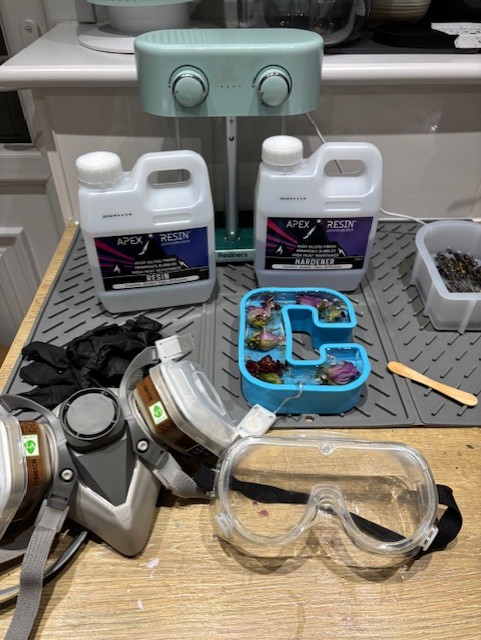
Are you wondering if resin is safe? Our ultimate resin safety and PPE guide will keep you right.
As long as you follow the safety instructions and take precautions you can work perfectly safely with epoxy resin.
This guide provides general information only. Your resin manufacturer’s instructions should always take priority.
IMPORTANT INFORMATION: Always make sure you follow the safety instructions for your brand of resin. Every brand will vary. Our tips are here to give general advice.
What is resin PPE?
PPE stands for personal protective equipment. The most important resin safety equipment includes:
- Chemical-resistant gloves
- Safety glasses or goggles
- Protective clothing
- Suitable footwear
- A respirator when required by the product instructions or risk assessment
PPE should be used alongside good ventilation and safe working practices. It should not be treated as a replacement for proper ventilation or careful handling.
1) Wear Suitable Gloves
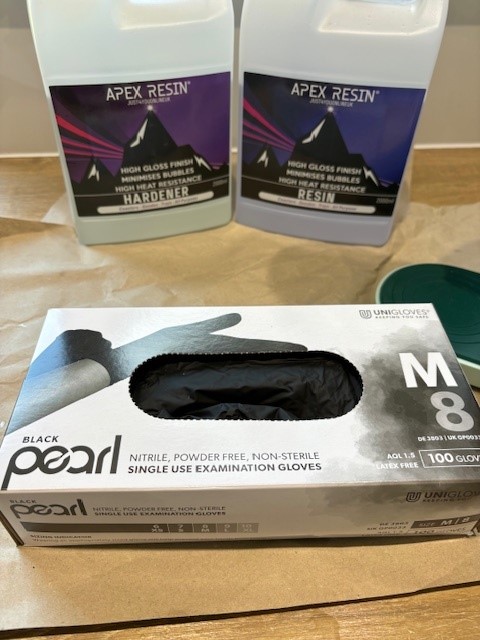
Wear disposable gloves to protect your hands from direct contact with the resin. Nitrile gloves are highly recommended because they provide good chemical resistance.
What should you do if resin gets on your skin?
If uncured resin gets on your skin:
- Remove contaminated clothing or jewellery.
- Wipe away excess resin carefully.
- Wash the affected area thoroughly with soap and plenty of water.
- Do not use solvents or harsh chemicals directly on your skin unless specifically advised by a medical professional.
- Seek medical advice if irritation, redness, itching or swelling develops.
Safety Tip: If there are any signs of reaction when using resin, ALWAYS seek medical advice as soon as possible.
2) Wear Eye Protection
Use safety goggles or a face shield to protect your eyes from splashes or accidental contact with epoxy resin. Always take care when pouring and avoid pouring from heights to reduce the possibility of splashing.
To reduce the risk of splashing:
- Mix resin slowly.
- Keep your mixing container close to the work surface.
- Avoid pouring from excessive heights.
- Do not overfill moulds or containers.
- Wear eye protection when cleaning tools or handling chemicals.
3) Use a Resin Respirator
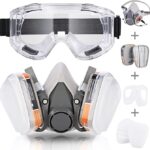
Depending on the type of epoxy resin and the ventilation conditions in your workspace, you may need to use a respirator to prevent inhalation of fumes. Some epoxy resins emit volatile organic compounds (VOCs) that can be harmful when inhaled.
We recommend this respirator that has changeable filters. A simple face covering will not provide the same amount of protection as they are not designed to filter out chemical particles or smells relating to chemical compounds.
Always ensure you work in a well ventilated space.
4) Wear Protective Clothing
Wear long sleeves and pants to protect your skin from contact with the resin. Additionally, consider wearing a lab coat or other protective clothing to minimize skin exposure.
It’s a good idea to remove any jewellery and not have expensive belongings near your work area as resin will stick and cure to almost everything.
5) Ensure you have proper ventilation
Work in a well-ventilated area or work with an open window to reduce the concentration of fumes in the air. Epoxy resin should not be used around children or animals due to the risks. Take regular breaks away from your workspace when working with resin.
The Resiners PurAir is specially designed to keep your work area safe. We highly recommend one especially if you have a small enclosed work space. Check out our review to find out how it works.
6) Protect your surfaces
Don’t forget that epoxy resin will stick to most surfaces! You’ll need to cover all areas that you are using when working with resin and make sure you remove any valuables from the area. We use cling film / saran wrap to cover everything including our scales.
Silicone work mats are also great as they can be washed and reused. Just make sure you use one that is heat resistant especially if you are using a heat torch.
9. Be careful when using heat
A heat gun or heat torch can help remove bubbles, but excessive heat can create additional risks.
Use heat carefully and:
- Keep the heat source moving.
- Avoid overheating the resin.
- Do not use a naked flame unless the product instructions specifically permit it.
- Keep heat away from flammable materials.
- Avoid heating resin in an enclosed space.
- Follow the instructions for your particular resin.
A heat tool should never be used as a substitute for correct mixing or careful pouring.
10. Clean spills safely
Deal with spills promptly and carefully.
For an uncured resin spill:
- Keep people and pets away from the area.
- Put on suitable PPE.
- Absorb the spill using disposable materials.
- Follow the manufacturer’s cleaning and disposal instructions.
- Clean the area thoroughly.
- Dispose of contaminated materials safely.
Avoid washing uncured resin down the sink, toilet or household drains. Resin can contaminate water systems and may harden inside pipes.
11. How should resin waste be disposed of?
Never pour liquid resin or hardener down the drain.
Follow the disposal instructions supplied with the product and check your local waste regulations. Small amounts of resin may sometimes be allowed to cure fully before disposal, but this depends on the product and local guidance.
Keep resin waste separate from ordinary household recycling unless your local authority specifically confirms that it is accepted.
Contaminated gloves, paper towels, mixing sticks and containers may need to be treated as chemical waste while the resin remains uncured.
12. Store resin correctly
How to store resin and hardener:
- In their original labelled containers
- With the lids tightly closed
- Away from direct sunlight
- Away from heat and ignition sources
- In a dry, suitable location
- Away from children and pets
- Separately from food, drink and medicines
Do not transfer resin into un-labelled containers. Make sure you can always identify the product and access its safety information.
13. What should you do if you feel unwell?
Stop working and move away from the workspace if you experience:
- Headaches
- Dizziness
- Nausea
- Breathing difficulties
- Eye irritation
- Skin irritation
- Itching or swelling
If symptoms continue or are severe, seek medical advice. If resin gets into your eyes, is swallowed or causes breathing difficulties, seek urgent medical help and take the product packaging or Safety Data Sheet with you if possible.
Common resin safety mistakes to avoid
Some of the most common mistakes beginners make include:
- Working without gloves
- Using a simple face mask instead of suitable respiratory protection
- Working in a poorly ventilated room
- Mixing resin near food or drink
- Allowing children or pets into the workspace
- Touching uncured resin with bare hands
- Pouring resin down the sink
- Using too much heat
- Guessing the resin-to-hardener ratio
- Reusing contaminated gloves
- Storing resin in unlabelled containers
- Assuming that a low-odour resin is completely harmless
Avoiding these mistakes will help make your resin workspace safer and more enjoyable.
Resin safety checklist for beginners
Before starting a resin project, check that:
- I have read the manufacturer’s instructions.
- I have checked the product’s safety information.
- I am wearing suitable gloves.
- I have eye protection available.
- My workspace is well ventilated.
- Children and pets are away from the area.
- My work surface is protected.
- I have measured the resin and hardener accurately.
- I know how to deal with spills.
- I know how to dispose of resin waste safely.
- I have suitable storage for the products.
- I have access to clean water and basic first-aid supplies.
Frequently asked questions about resin safety
Is epoxy resin dangerous?
Uncured epoxy resin and hardener can irritate the skin, eyes and respiratory system. Repeated exposure may cause skin sensitivity or allergic reactions. Epoxy resin can be used more safely by following the manufacturer’s instructions, using suitable PPE and working in a well-ventilated area.
Can I use resin without gloves?
You should not deliberately handle uncured resin without gloves. Direct skin contact can cause irritation and may contribute to sensitisation. Wear suitable chemical-resistant gloves and replace them if they become contaminated or damaged.
Are resin fumes harmful?
Some resin products release vapours or other substances that may be harmful when inhaled. The level of risk varies between products and depends on ventilation and how the resin is used. Always check the product’s safety information and use respiratory protection when required.
Is a disposable face mask suitable for resin?
A basic disposable face mask is not designed to protect against chemical vapours. If respiratory protection is required, use a suitable respirator with the correct filters and follow the manufacturer’s instructions.
Can I use resin in my bedroom?
A bedroom is generally not an ideal resin workspace, particularly if it has poor ventilation or is also used for sleeping. Choose a dedicated, well-ventilated workspace where resin products can be stored safely and other people and pets can be kept away.
Can children use epoxy resin?
Most professional epoxy resin products are not suitable for children. Always check the age guidance and safety information for the specific product. Children should never use resin without close adult supervision.
Can I wash resin down the sink?
No. Do not pour uncured resin, hardener or resin-contaminated cleaning water down the sink. Follow the product’s disposal instructions and local waste regulations.
Is cured resin safe to touch?
Fully cured resin is generally safer to handle than uncured resin, but the finished item is only suitable for its intended use if it has been made and cured correctly. Always follow the resin manufacturer’s curing instructions.
Final thoughts on resin safety
Resin crafting can be a rewarding hobby when you understand the materials and take sensible precautions. The most important steps are to read the manufacturer’s instructions, wear suitable PPE, work in a well-ventilated space and avoid direct contact with uncured resin.
If you are new to resin, start with small projects, keep your workspace organised and never rush the mixing or curing process. Good resin safety habits will help you enjoy crafting while reducing unnecessary risks.
If you experience an allergic reaction or epoxy comes in to contact with your eyes, please seek medical advice as soon as possible.
More helpful topics