
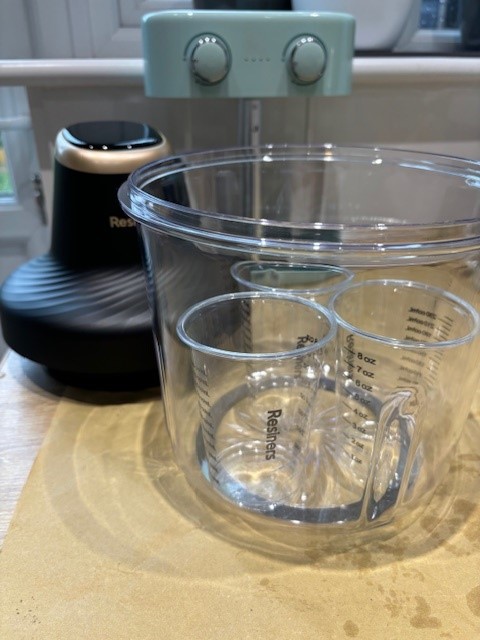
If you work with epoxy resin, you’ll know that bubbles can be one of the most frustrating problems. Whether you’re making jewellery, coasters, trays, keyrings or larger resin projects, trapped air bubbles can affect the clarity and finish of your finished piece.
You may have seen resin bubble removers and vacuum chambers advertised as solutions to this problem. Although both are designed to help reduce bubbles in resin, they work in very different ways.
So, what is the difference between a resin bubble remover and a vacuum chamber, and which one is best for your resin projects?
In this guide, we’ll explain how each piece of equipment works, compare their advantages and disadvantages, and help you decide which option is right for your resin crafting projects.
What Is a Resin Bubble Remover?
A resin bubble remover is a piece of equipment designed to help remove trapped air bubbles from mixed resin. Depending on the model, it may use a pressure chamber, a vacuum system or another bubble-reduction method.
The term resin bubble remover is often used broadly, so it’s important to check how a particular product works before buying it.
For example, some products sold as resin bubble removers use pressure to compress air bubbles, while others use vacuum technology to help air escape from the resin.
How does a resin bubble remover work?
The process depends on the type of equipment you choose.
- A pressure-based resin bubble remover works by placing resin inside a sealed pressure pot and applying compressed air. The increased pressure compresses bubbles, making them much smaller. When the resin cures while under pressure, these bubbles can become virtually invisible.
Check out our recommended pressure-based vacuum pot.
- A vacuum-based bubble remover works differently. It reduces the pressure surrounding the resin, encouraging trapped air to expand and escape from the mixture.
Check out the Resiners vacuum-based bubble remover.
Both methods can help improve the appearance of resin, but they are not interchangeable.
What are the benefits of a resin bubble remover?
The main benefits depend on the technology used, but can include:
- Reducing visible bubbles in finished resin projects.
- Improving the clarity of transparent epoxy resin.
- Helping achieve a more professional finish.
- Making bubble management more reliable for suitable projects.
- Reducing the need to remove individual bubbles manually.
However, no bubble-removal system can compensate for every problem. Incorrect mixing, moisture, unsuitable temperatures and poor-quality moulds can all contribute to defects.
What Is a Vacuum Chamber for Resin?
A vacuum chamber is a sealed container connected to a vacuum pump. It removes air from the chamber, lowering the pressure around the resin.
As the pressure drops, air bubbles trapped inside the resin expand. These bubbles can rise to the surface and burst, allowing air to escape before the resin is poured into a mould.
A vacuum chamber removes air from resin before pouring, whereas a pressure pot compresses bubbles so they are less visible during curing.
This is an important distinction when choosing equipment for epoxy resin crafts.
How does a vacuum chamber work?
The process generally involves the following steps:
- Mix your resin and hardener according to the manufacturer’s instructions.
- Pour the mixed resin into a suitable container, leaving plenty of room for expansion.
- Place the container inside the vacuum chamber.
- Close the chamber and operate the vacuum pump according to the equipment instructions.
- Allow the resin to foam and expand as the trapped air escapes.
- Maintain the vacuum for the recommended period, monitoring the resin carefully.
- Release the vacuum gradually and safely before removing the resin.
- Pour the degassed resin into your mould.
The exact procedure will depend on the resin formulation, its working time, the size of the batch and the vacuum equipment being used.
What are the benefits of a vacuum chamber?
Vacuum chambers can be particularly useful for resin artists who regularly mix larger quantities of resin or need to reduce bubbles before pouring.
Benefits include:
- Removing trapped air: Helps extract bubbles from mixed resin before it is poured.
- Improving clarity: Can reduce bubbles in clear resin when used correctly.
- Preparing resin for casting: Useful for suitable casting applications where bubble-free material is important.
- Repeatability: Can help experienced makers achieve more consistent results.
- Versatility: Vacuum equipment can be used for other suitable degassing applications, depending on the chamber and materials involved.
However, vacuum degassing is not always necessary for small resin projects. It can also cause resin to foam dramatically, and the process may be unsuitable for fast-curing resin with a short working time.
Resin Bubble Remover vs Vacuum Chamber: What Is the Difference?
The most important factor is the technology the equipment uses. A vacuum chamber is a specific type of equipment, whereas a resin bubble remover is a broader product description.
The comparison below focuses on the difference between a vacuum chamber and a pressure-based resin bubble remover, as these are commonly confused.
| Feature | Vacuum chamber | Pressure-based bubble remover |
|---|---|---|
| How it works | Lowers air pressure to help bubbles escape | Uses increased pressure to compress bubbles |
| When it is used | Before pouring and curing | During curing, while the resin remains under pressure |
| Main purpose | Degassing mixed resin | Making remaining bubbles too small to see |
| Typical equipment | Vacuum chamber and vacuum pump | Pressure-rated pot, compressor and suitable fittings |
| Resin expansion | Resin may foam and expand | Resin generally does not foam from the pressure process |
| Best suited to | Removing air before casting | Reducing visible bubbles in suitable castings |
| Main consideration | Requires careful monitoring and sufficient working time | Requires appropriate pressure-rated equipment and safe operation |
TIP: Remember that product names can be misleading. Always check whether a product uses vacuum or positive pressure rather than relying on its name alone.
Which Is Better for Epoxy Resin: A Vacuum Chamber or a Bubble Remover?
Neither option is automatically better. The right choice depends on your project, the type of resin you use and how much equipment you want to invest in.
Choose a vacuum chamber if:
- You want to remove trapped air from resin before pouring.
- You regularly mix larger batches of suitable casting resin.
- You work on projects where clarity is particularly important.
- You have enough working time to degas the resin safely.
- You are comfortable learning how to operate vacuum equipment.
Vacuum degassing can be particularly useful for suitable resin formulations used in casting and other applications where removing air before pouring is beneficial.
Choose a pressure-based bubble remover if:
- You want to minimise visible bubbles in finished castings.
- You regularly make clear resin jewellery, charms or decorative pieces.
- You need to reduce the appearance of small bubbles that remain after mixing and pouring.
- You have moulds and projects suitable for pressure casting.
- You want to produce consistent results across multiple pieces.
Pressure casting can be especially useful for transparent moulded pieces, but it requires proper pressure-rated equipment and compatible moulds.
What if you are a beginner?
If you are new to epoxy resin, you probably don’t need to buy either piece of equipment straight away.
Start by learning how to mix resin correctly, reduce the amount of air introduced during mixing and choose a resin suitable for your project.
You can often reduce bubbles by:
- Mixing slowly and thoroughly, following the resin manufacturer’s instructions.
- Scraping the sides and bottom of your mixing cup.
- Keeping your workspace and materials within the recommended temperature range.
- Using a suitable resin with enough working time for your mould or casting.
- Pouring slowly and carefully.
- Using a heat gun or other approved surface-bubble treatment where appropriate.
A heat gun can help remove bubbles at the surface of poured resin, but it won’t reliably remove all bubbles trapped deeper in a mould. Excessive heat can also damage your project or create a fire risk, so follow the resin manufacturer’s guidance.
For many small craft projects, these simple techniques are enough to achieve a good finish without buying additional equipment.
Can You Use a Vacuum Chamber and a Pressure Pot Together?
Yes. Some experienced resin artists use both, as they perform different functions.
A vacuum chamber can help remove air from mixed resin before pouring. A pressure pot can then compress any remaining bubbles while the resin cures, provided the resin, mould and equipment are suitable for that process.
However, using both is not essential for every project. The additional equipment, cost and preparation time may not be worthwhile for simple jewellery, small decorations or projects where a few tiny bubbles are acceptable.
It is also important to understand that vacuum degassing does not guarantee a completely bubble-free result. Air can be introduced again during pouring, and bubbles can become trapped in complex moulds or around embedded objects.
Do You Need a Vacuum Chamber for Resin Jewellery?
Most beginners making resin earrings, pendants, keyrings and small decorative items do not need a vacuum chamber.
For these projects, careful mixing, a suitable resin formulation, slow pouring and attention to mould design can often make a significant difference.
A vacuum chamber may be worth considering if you produce resin pieces regularly, work with larger batches or need a more controlled degassing process.
A pressure pot may be more appropriate if your main problem is the appearance of tiny bubbles in transparent moulded pieces. However, small jewellery moulds must be compatible with the pressure-casting process, and the equipment must be operated within its rated limits.
If you are making resin jewellery commercially, consistency matters, but buying expensive equipment before understanding the cause of your bubbles may not be the best investment.
Are Vacuum Chambers and Pressure Pots Safe to Use With Resin?
Both types of equipment require care and correct operation.
Vacuum chambers are exposed to external atmospheric pressure when a vacuum is created. Use a chamber specifically designed for vacuum service, inspect it before use and never substitute an ordinary container or unsuitable glass vessel.
Pressure pots operate under positive pressure and must be specifically rated for that purpose. Never use an improvised container, exceed the manufacturer’s pressure limits or open a pressurised pot.
For both methods:
- Follow the equipment manufacturer’s instructions.
- Wear the appropriate gloves, eye protection and other PPE specified by the resin safety data sheet.
- Work in a well-ventilated area.
- Check that your resin is compatible with the process.
- Monitor the resin’s working time and temperature.
- Keep resin and hardener away from skin and eyes.
- Never leave equipment operating outside the manufacturer’s recommended procedures.
Always consult the resin manufacturer’s technical data sheet and safety data sheet before introducing vacuum or pressure into your workflow.
How Can You Reduce Resin Bubbles Without Special Equipment?
If you don’t want to invest in a vacuum chamber or pressure pot, there are several ways to improve your results.
1. Mix slowly
Vigorous mixing introduces additional air into your resin. Stir slowly, scraping the sides and bottom of the cup to ensure the resin and hardener are fully combined.
2. Choose the right resin
Different epoxy resins have different viscosities, working times and recommended pouring depths. A low-viscosity casting resin may allow bubbles to escape more easily than a thicker formulation, although suitability depends on the project.
3. Check your temperature
Cold resin can be more viscous, making it harder for bubbles to escape. Keep your materials within the temperature range specified by the manufacturer. Avoid uncontrolled heating, which can accelerate curing or create other problems.
4. Pour carefully
Pour slowly and steadily. For suitable moulds, a thin stream of resin can help minimise the introduction of new air.
5. Remove surface bubbles safely
A suitable heat gun may help remove surface bubbles, but use it sparingly and follow the resin manufacturer’s advice. Never use an open flame around resin, and be particularly cautious when working near flammable materials.
6. Check your mould
Small gaps, intricate details and textured moulds can trap air. Pouring in stages or gently manipulating the mould, where appropriate, may help resin reach difficult areas.
Frequently Asked Questions
Is a resin bubble remover the same as a vacuum chamber?
Not necessarily. A resin bubble remover is a broad product term that can refer to different types of equipment. A vacuum chamber removes air by reducing pressure, while a pressure pot compresses bubbles using increased pressure.
Does a vacuum chamber remove all bubbles from epoxy resin?
No. Vacuum degassing can significantly reduce trapped air in suitable resin formulations, but it does not guarantee that every bubble will be removed. Air can be reintroduced during pouring, and bubbles may remain trapped in complex moulds.
Is a pressure pot better than a vacuum chamber for resin?
A pressure pot is often more suitable when the main aim is to minimise visible bubbles in finished moulded castings. A vacuum chamber is designed to help remove air from resin before pouring. The best option depends on your project and resin.
Can I use a vacuum chamber with any epoxy resin?
No. Some resins foam excessively, cure too quickly or behave unpredictably under vacuum. Check the manufacturer’s guidance and ensure you have enough working time to complete the process safely.
Can I use a heat gun instead of a vacuum chamber?
For many small resin crafts, a heat gun can help remove surface bubbles without specialist equipment. However, it is not a direct replacement for vacuum degassing because it generally cannot remove bubbles trapped deep inside the resin.
Do beginners need a vacuum chamber for resin?
Usually not. Beginners can often reduce bubbles by mixing slowly, choosing a suitable resin, pouring carefully and using an appropriate surface-bubble removal technique. Specialist equipment becomes more useful when project requirements justify the investment.
Why does my resin still have bubbles after using a vacuum chamber?
Bubbles may remain because the resin was not fully degassed, the resin was too viscous, the working time was too short, or air was introduced during pouring. Some formulations also foam or behave differently under vacuum. Review your process and follow the resin manufacturer’s recommendations.
Final Thoughts: Which Resin Bubble Removal Method Should You Choose?
The main difference between a vacuum chamber and a pressure-based resin bubble remover is how each handles air bubbles.
A vacuum chamber helps remove air from mixed resin before pouring, while a pressure pot compresses remaining bubbles during curing, making them less visible in the finished piece.
For beginners making small resin crafts, careful mixing and pouring are often the best starting point. If you regularly produce transparent castings or need more consistent results, specialist equipment may be worth considering.
Before investing, identify the type of bubbles you are experiencing, check your resin’s specifications and choose equipment that suits your projects.
With the right techniques and a little practice, you can reduce bubbles and create clearer, more professional-looking resin crafts.