
Firstly, if you are reading this, we are sorry that you or someone close to you has lost a loved one.
A lot of people are keen to celebrate the life of a loved one by preserving funeral flowers in resin.
In this guide, we’ll explain how to preserve wedding flowers in resin, the materials you’ll need, and expert tips to ensure professional-quality results.
IMPORTANT TIP:
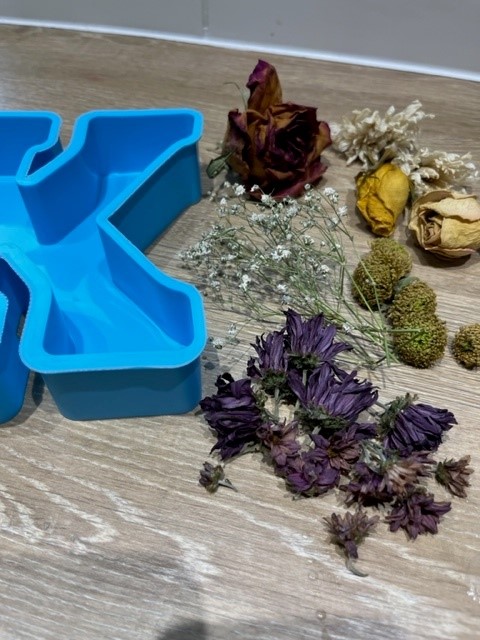
We HIGHLY recommend that you practice the below on some non-precious flowers before you go ahead and try with your own flowers. Always keep some flowers spare. Don’t use them all at the same time in case anything goes wrong.
Why Preserve Funeral Flowers in Resin?
Resin preservation offers long-term protection and visual appeal that traditional drying methods cannot match.
Benefits of Funeral Flower Preservation in Resin:
- Preserves flowers permanently without fading
- Maintains the three-dimensional structure of blooms
- Protects petals from moisture, mold, and air exposure
- Creates custom keepsakes like resin blocks, trays, jewelry, and frames
Unlike pressing or air drying alone, resin seals your funeral flowers in crystal-clear epoxy for lifelong preservation.
Step 1: Select the Best Flowers for Resin Preservation
Not all flowers preserve equally well in resin. Some blooms dry and encapsulate better than others.
Best Flowers to Preserve in Resin:
- Roses
- Peonies
- Ranunculus
- Daisies
- Baby’s breath
- Eucalyptus and other greenery
This doesn’t mean to say you can’t preserve other flowers, it just means that results may vary and they may brown or not hold their shape as well.
Tip: Preserve your funeral flowers within 24–48 hours after the service for best results. You could maybe ask a friend or family member to do this for you aren’t quite ready to do this straight away.
Step 2: Dry Funeral Flowers Completely Before Using Resin
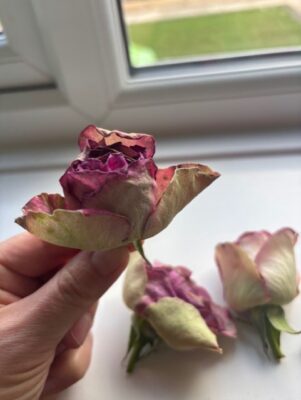
Fresh flowers must be completely dried before resin preservation to prevent cloudiness, discoloration, or mold growth within the resin.
Popular Flower Drying Methods:
- Silica gel drying (best for wedding bouquets)
Silica sand like this one is best as it is gentle on flowers. You will need and air tight container which you will add a layer of sand then flowers, with a top layer of sand completely covering your flowers before sealing tight and storing in a dark dry place.
You will need a large quantity of sand to ensure your flowers are covered.
Smaller flowers can take 1-2 days with larger, fresher flowers taking 3 weeks or more. - Air drying (ideal for sturdy flowers and greenery)
You can hang your flowers upside down in a dark dry place. This can take 2-6 weeks depending on your flowers and the temperature of your space. - Pressed flower drying (perfect for flat resin designs)
A flower press like this will hold a number of flowers.
You can also buy a microwave flower press which will give you pressed and dry flowers in a much quicker time.
Your flowers should feel crisp and moisture-free before moving to the resin stage.
Step 3: Prepare Resin and Flower Preservation Molds
Use a high-quality epoxy resin specifically designed for flower preservation or casting. We recommend a deep pour resin like Apex Deep Pour as it will cure slowly and release bubbles that become trapped in flowers before curing.
Use code RESINFORBEGINNERS to get 15% off Apex Resin.
Supplies Needed:
- Epoxy resin and hardener
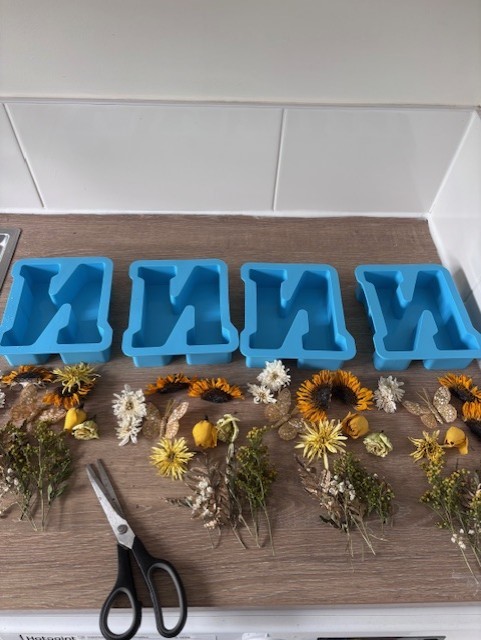
- Silicone molds (blocks, hearts, letters, trays, or coasters)
- Mixing cups and stir sticks
- Protective gloves
- Heat gun or torch for bubble removal
Work in a clean, dust-free, and well-ventilated space for best results.
Step 4: Arrange Flowers Inside the Resin Mold
Before pouring resin, plan your design:
- Decide flower placement and orientation
- Trim stems as needed
- Make sure that your flowers won’t be sticking out of the mould
- Create a balanced composition with petals and greenery
Pre-arranging ensures your preserved flowers look intentional and visually appealing.
Step 5: Pour Resin in Layers to Preserve Flowers
Layered pouring is essential for successful funeral flower resin preservation. This will stop your flowers rising above your mould and ensures they can be fully covered in resin.
- Pour a thin base layer and allow it to partially cure
- Place dried flowers on the tacky surface
The time it takes for your resin to go tacky will depend on your chosen brand. - Slowly pour additional layers until flowers are fully encapsulated
Use a heat gun after each pour to eliminate air bubbles.
Step 6: Cure, Sand, and Polish the Resin Keepsake
Resin curing typically takes 24–72 hours, depending on thickness and product instructions.
Once cured:
- Remove the piece from the mold
- Sand edges for smoothness
- Polish or add a top coat for a high-gloss, glass-like finish
Common Funeral Flower Resin Preservation Mistakes
Avoid these common errors:
- Using fresh or partially dried flowers
- Pouring resin too thick in one layer
- Using low-quality or fast-cure resin
- Working in humid conditions
Proper preparation ensures long-lasting clarity and color.
DIY vs Professional Funeral Flower Preservation
DIY resin preservation can be rewarding, but funeral flowers are irreplaceable. Many choose professional flower preservation services to ensure flawless results and heirloom-quality pieces.
Professional artists specialise in bouquet preservation and offer custom designs with guaranteed longevity.